
What Is Bromantane (Ladasten)? The Russian Actoprotector, Examined
Bromantane (Ladasten) is a Russian actoprotector that raises dopamine synthesis enzymes rather than blocking reuptake. What the rodent and clinical literature actually shows.
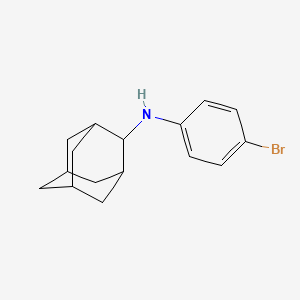
Bromantane (trade name Ladasten) is a Russian-developed actoprotector, an adamantane derivative studied as an anti-fatigue and antiasthenic agent. In rodents it raises dopamine-synthesis enzymes rather than blocking reuptake. Almost all evidence is single-country and open-label; it is WADA-prohibited under S6.
Bromantane, sold in Russia under the trade name Ladasten, is one of the odder entries in the stimulant-adjacent pharmacopoeia: an adamantane derivative that its developers classed not as a stimulant but as an « actoprotector » — a synthetic anti-fatigue agent. What makes it mechanistically interesting is that, in rodents, it appears to raise brain dopamine not by blocking the dopamine transporter but by switching on the enzymes that build dopamine in the first place. Everything below describes laboratory and literature findings in animals and Russian clinical practice, not use in people.
What is bromantane, structurally?
Bromantane is N-(2-adamantyl)-N-(4-bromophenyl)amine, molecular formula C16H20BrN, CAS 87913-26-6 for the free base. Structurally it belongs to the aminoadamantane family — the same rigid tricyclic adamantane cage that underlies amantadine and memantine — carrying a para-bromophenyl group on the amine. It shares essentially nothing with the phenethylamine backbone of the amphetamines, which is the first hint that its pharmacology would not follow the classic stimulant script.
The compound emerged from Soviet-era work on « actoprotectors, » a drug class defined largely within Russian pharmacology as agents that improve physical and mental work capacity under fatigue and stress without the crash profile of psychostimulants. An independent English-language review by Oliynyk and Oh remains the most useful non-Russian framing of that class and of bromantane’s place in it.10 In animal work, bromantane (0.5-50 mg/kg) improved swimming and treadmill performance in mice and rats, with effects reported to persist for a day or more and a proposed membrane-protective component — the primary basis for the anti-fatigue « actoprotector » label.11
How does it work — and why isn’t it a normal stimulant?
The most-cited mechanism paper is Mikhaylova and colleagues, a Russian-German collaboration published in Neuropharmacology. A single oral dose of ladasten at 50 mg/kg in rats differentially up-regulated tyrosine hydroxylase (TH) — the rate-limiting enzyme of dopamine synthesis — at both the mRNA and protein level, alongside increases in L-DOPA and dopamine content across the ventral tegmental area, nucleus accumbens, hypothalamus, striatum and hippocampus.1 The same work reported that ladasten converted short-term into long-term potentiation in the hippocampus through protein-synthesis- and D1/D5-dependent mechanisms.
2-2.5x the reported rise in tyrosine-hydroxylase mRNA in rat hypothalamus and VTA within roughly 1.5-2 hours of a single 50 mg/kg oral dose.
Earlier Russian gene-expression work pointed the same way. Vakhitova and colleagues reported that ladasten (50 mg/kg) activates transcription of both TH and DOPA-decarboxylase (aromatic L-amino-acid decarboxylase) in the striatum and hypothalamus, with L-DOPA and dopamine accumulation tracking the transcriptional changes — the signature of de novo synthesis rather than redistribution of existing stores.2 A companion English-language paper described the broader set of rat-brain genes whose expression shifts after a single dose, proposing that genomic profile as the molecular basis for the compound’s combined anxiolytic and psychostimulant character.3
It appears to raise dopamine by building more of it, not by blocking its clearance — which is why the « stimulant » label sits awkwardly on the pharmacology.
That said, the picture is not purely genomic. In-vivo microdialysis in freely moving rats showed a pronounced, prolonged (~8 h) increase in extracellular striatal dopamine release, partly tetrodotoxin-sensitive — the earliest primary evidence of the dopaminergic action.4 A separate characterisation described bromantane’s central action as principally « dopamine-positive, » noting antagonism of neuroleptics and blockade of synaptosomal dopamine uptake at 50 micromolar, with weaker serotonergic and noradrenergic components, and explicitly contrasting it with classic releasers such as sydnocarb.5 So the honest summary is a slow, enzyme-induction-led rise in synthesis, layered on top of a more conventional but modest effect on release and uptake.
| Property | What the literature reports |
|---|---|
| Identité | N-(2-adamantyl)-N-(4-bromophenyl)amine; C16H20BrN; CAS 87913-26-6; trade name Ladasten |
| Class | Russian « actoprotector » — combined mild psychostimulant + anxiolytic profile |
| Primary rodent mechanism | Genomic up-regulation of TH and DOPA-decarboxylase → de novo dopamine synthesis12 |
| Secondary pharmacology | ~8 h rise in striatal dopamine release (microdialysis); modest serotonergic component45 |
| Regulatory status | WADA Prohibited List, S6 Stimulants; not EMA/FDA approved9 |
All mechanistic figures are from rat and mouse studies. None describes human dosing, and none should be read as a use or safety recommendation for any organism.
What about the anxiolytic and immune angles?
Beyond dopamine, ladasten was originally described as an immunostimulant, and part of its interest lies in effects that sit outside the monoamine story. In an LPS-induced depression-like mouse model, ladasten lowered pro-inflammatory TNF-alpha and IL-6 more than imipramine and prevented the associated behavioural disturbance, suggesting an immune or anti-inflammatory dimension.6 The anxiolytic side of its profile has been discussed in relation to GABAergic modulation in stress-reactive rat lines, though this strand is thinner than the dopamine work. These findings are single-lab, single-species, and should be read as hypotheses rather than settled biology.
The clinical and doping record
The largest clinical dataset is a Russian multicentre study across 28 centres in 728 patients with asthenic disorders and psychoautonomic syndrome, using ladasten 50-100 mg/day for 28 days. The authors reported responder rates of 76% on CGI-S and 90.8% on CGI-I, an antiasthenic effect emerging from day 3, and adverse events in only around 3%.7 An earlier pilot trial in psychogenic asthenic disorder described the same unusual combined psychostimulant-plus-anxiolytic character, with the stimulant effect predominating on single dosing. Ladasten was a registered antiasthenic medicine in Russia — but, as the next section stresses, « registered in Russia » and « demonstrated in controlled trials » are not the same claim.
Internationally, bromantane is best known as a doping agent. It surfaced in Western attention after the 1996 Atlanta Olympics, when a French military laboratory published a contemporaneous note in The Lancet flagging it as a novel doping substance.8 It remains on the current WADA Prohibited List under S6 (Stimulants) as a non-specified stimulant, prohibited in-competition.9 There is a genuine tension here worth stating plainly: functionally it is banned as a stimulant, yet its documented pharmacology is not that of a classic stimulant. Both descriptions are defensible depending on whether you weight the regulatory function or the mechanism.
An honest read of the evidence
The single most important thing to understand about bromantane is that almost every efficacy and mechanism finding traces back to Russian groups — the Seredenin and Zakusov institutes, Morozov, Vakhitova and their affiliates, which include the compound’s own developers. Even the flagship Neuropharmacology mechanism paper, which carries German co-authorship and reads as the most « independent, » still shares Russian authorship from the developer’s institutes.1 It is a collaboration, not a clean external replication. No independent Western laboratory has reproduced the tyrosine-hydroxylase induction, and no independent group has reproduced the asthenia efficacy. A mechanism confirmed by one collaborating lineage is not the same as a mechanism confirmed by science at large.
The clinical picture has the same problem, magnified. The 728-patient study — the strongest human dataset — is open-label, with no described blinded placebo arm, published in a Russian-language journal that sees limited external scrutiny.7 There are no modern registered randomised controlled trials, and neither the FDA nor the EMA has evaluated the compound. Open-label responder rates in asthenia, a condition with a large placebo response, cannot carry the weight that a controlled trial would. The human evidence is also confined to asthenia and psychoautonomic syndrome; there is no rigorous human data for the « cognitive enhancement, » mood, or general nootropic uses casually attributed to bromantane online.
Two further caveats. First, essentially all mechanistic and safety data are rodent, at mg/kg exposures that do not map cleanly onto human pharmacokinetics — and the animal safety record is not blank. A rat neurotoxicity screen showed a biphasic dose-response, with stimulation at 30-300 mg/kg and behavioural suppression at higher doses, and other work has flagged blood and haematopoietic tissue as targets under high chronic dosing.9 Second, the widely repeated online framing of bromantane as a « dopamine-synthesis enhancer that isn’t a stimulant » rests entirely on this narrow Russian base. The atypical pharmacology is real, but so is the thinness of the evidence — the honest position is that the compound is genuinely interesting and genuinely under-replicated at the same time.
All materials referenced by Condor Research are Research Use Only (RUO). Everything above summarises in-vitro, animal, and published clinical literature only; it is not a dosing protocol, clinical guidance, or safety assessment for any organism. Condor Research does not list bromantane as a confirmed catalogue product and makes no purity or COA claim for it. For related non-classical cognitive-research compounds, see our notes on Semax, Selank, non-peptide nootropics, and the Cerebrolysin research guide.
Condor Research · Service scientifique
Atrio Sciences s.r.o., IČO 57 669 651, Nitra (SK) · info@condorresearch.com
- Bromantane is N-(2-adamantyl)-N-(4-bromophenyl)amine (C16H20BrN, CAS 87913-26-6), an aminoadamantane derivative marketed in Russia as Ladasten.
- It is classed as an 'actoprotector' — a synthetic anti-fatigue agent — with an unusual combined mild-psychostimulant plus anxiolytic profile, distinct from amphetamine-type stimulants.
- Its characterised rodent mechanism is genomic: it up-regulates tyrosine hydroxylase and DOPA-decarboxylase to increase de novo dopamine synthesis, not primarily reuptake blockade or release.
- A single 50 mg/kg oral dose in rats raised tyrosine-hydroxylase mRNA roughly 2-2.5x in hypothalamus and VTA within 1.5-2 h, with parallel L-DOPA and dopamine increases across several regions.
- The largest clinical dataset is an open-label Russian multicentre study of 728 asthenia patients, with no described placebo arm; there is no FDA or EMA evaluation.
- Bromantan is currently on the WADA Prohibited List under S6 (Stimulants), first flagged internationally after the 1996 Atlanta Olympics.
- The efficacy and mechanism evidence is overwhelmingly single-lineage Russian work with no independent Western replication.
Is bromantane the same as Ladasten?
Yes. Ladasten is the Russian trade name under which bromantane was marketed and studied as an antiasthenic drug. In the literature the two names are used interchangeably, with "ladasten" more common in the clinical and mechanism papers and "bromantan" or "bromantane" in the doping and chemistry contexts.
How is its mechanism different from amphetamine?
Amphetamine-type stimulants act at the dopamine transporter to release and block reuptake of existing dopamine. Bromantane's characterised rodent mechanism is genomic: it up-regulates the synthesis enzymes tyrosine hydroxylase and DOPA-decarboxylase to increase de novo dopamine production. It does show some effect on release and uptake, but the enzyme-induction pathway is what makes it pharmacologically atypical.
Is bromantane banned in sport?
Yes. Bromantan is listed on the current WADA Prohibited List under S6 (Stimulants) as a non-specified stimulant, prohibited in-competition. It was among the first "designer" doping agents flagged internationally, following detections at the 1996 Atlanta Olympics.
Is there good human evidence that it works?
Not by modern standards. The largest human study is an open-label Russian multicentre trial in 728 asthenia patients with no described placebo arm, and there are no registered randomised controlled trials or FDA/EMA evaluations. The compound was registered in Russia, but registration there does not equal controlled-trial proof of efficacy.
Why do people call it an "actoprotector"?
"Actoprotector" is a Russian pharmacology term for agents that improve physical and mental work capacity under fatigue and stress. Bromantane earned the label from animal studies showing improved endurance in swimming and treadmill tasks lasting a day or more. An independent English-language review by Oliynyk and Oh is the best non-Russian source for understanding the class.
Is bromantane approved as a medicine in Europe or the US?
No. It was a registered antiasthenic drug in Russia but has never been approved or evaluated as a medicine by the EMA or FDA. Outside Russia it exists only as a research compound, which is the only context in which it is referenced here.