
What Is BAM15? The Mitochondrial Uncoupler Studied in Metabolic Research
BAM15 is a mitochondrial uncoupler studied in cell and rodent metabolic research. What it is, how it works, the evidence, and why it is compared to DNP.
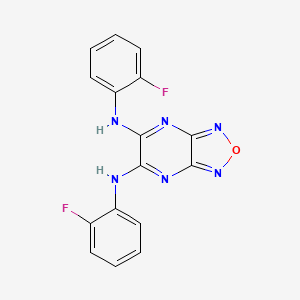
BAM15 is a small-molecule mitochondrial uncoupler studied in cell and rodent metabolic research. In mice it raised energy expenditure and reduced fat mass without altering food intake. It has no human trials, no drug approval, and is supplied strictly Research Use Only.
BAM15 is one of a small set of molecules chemists call mitochondrial uncouplers: compounds that let protons leak back across the inner mitochondrial membrane, so the cell burns fuel without capturing the usual amount of ATP. It surfaced in metabolic research because, in mice, that controlled inefficiency translated into fat loss without appetite suppression. It sits inside a lineage — the classic uncoupler 2,4-dinitrophenol (DNP) — that has a lethal reputation, which is precisely why a cleaner-profile tool molecule drew attention. Everything below describes laboratory and rodent findings, not use in people.
What is BAM15, structurally?
BAM15 is a synthetic small molecule with the formula C16H10F2N6O and CAS number 852479-70-2. Its IUPAC name is 5-N,6-N-bis(2-fluorophenyl)-[1,2,5]oxadiazolo[3,4-b]pyrazine-5,6-diamine — an oxadiazolo-pyrazine diamine core carrying two fluorophenyl arms.7 That scaffold matters: it is lipophilic and weakly acidic, and the fluorines and the fused heteroaromatic ring are what let the molecule pick up a proton on one side of a membrane and release it on the other. This is not an incidental structural detail; it is the whole mechanism.
How does the uncoupling mechanism work?
Mitochondria normally pump protons out of the matrix to build an electrochemical gradient, then let those protons flow back through ATP synthase to make ATP. A protonophore uncoupler is a shortcut: as a lipophilic weak acid, BAM15 ferries protons across the inner membrane independent of ATP synthase, dissipating part of the proton-motive force.15 The electron transport chain keeps running — in fact it runs faster to try to rebuild the gradient — so oxygen consumption and substrate oxidation go up while ATP yield per unit fuel goes down. The dissipated energy leaves as heat. A reported secondary consequence is lower mitochondrial reactive-oxygen-species output, because a partially collapsed gradient reduces the back-pressure that drives electron leak.1
0 published human clinical trials of BAM15 exist; the entire evidence base is cells and rodents.
Why is BAM15 defined against DNP and FCCP?
The discovery paper — Kenwood and colleagues at the University of Virginia, published in Molecular Metabolism in 2014 — did not just name BAM15. Its central claim was a contrast. FCCP and DNP, the textbook uncouplers, do their job but also depolarize the plasma membrane and carry off-target effects that give them a narrow usable window. BAM15 was characterized as an uncoupler that increased mitochondrial respiration without depolarizing the plasma membrane, which widened its window as a chemical tool.1 A 2015 medicinal-chemistry follow-up from the same group mapped the structure–activity relationships of this furazanopyrazine scaffold, refining why the core works.3 (These are two separate papers; the 2014 Mol Metab study is the discovery report, not the 2015 SAR paper.)
The DNP comparison is not academic. DNP was sold as a weight-loss drug in the 1930s, was pulled, and still circulates illicitly. Its therapeutic index is dangerously narrow, and it has killed people — including documented modern fatalities used as diet drugs.1112 Comparative toxicology in rats places DNP alongside other uncouplers as agents with real organ toxicity.11 BAM15 exists as a research tool precisely because investigators wanted uncoupling without that liability. Designing around a known toxicity, however, is not the same as proving safety.
BAM15 was engineered to avoid the off-target toxicity that makes DNP lethal — but avoiding a known failure mode is not the same as proving long-term safety.
What did the rodent metabolic studies actually show?
The anchor study is Alexopoulos and colleagues in Nature Communications, 2020. In diet-induced obese mice, orally administered BAM15 increased nutrient oxidation and reduced body fat. The details that made it notable: fat mass fell without a drop in food intake, without loss of lean mass, and without a rise in body temperature, and insulin sensitivity improved on a hyperinsulinemic-euglycemic clamp.2 That the animals did not simply eat less or overheat is what separated the result from a crude metabolic poison.
A second group at the Cleveland Clinic — Axelrod and colleagues, EMBO Molecular Medicine, 2020 — independently reproduced anti-obesity and glycemic benefits in diet-induced obese mice.4 Independent replication in a different lab is the single most important quality signal here, and it exists. Since then the preclinical indication set has widened, all still in rodents or cells: db/db diabetic mice under calorie restriction,6 head-to-head comparisons against semaglutide and rosiglitazone in female db/db mice,7 sarcopenic-obesity models where BAM15 improved skeletal-muscle mitophagy,8 and fatty-liver (MASLD) combination studies with resmetirom.9
| Study | Model | Reported observation |
|---|---|---|
| Kenwood 2014 | Cell / mitochondrial assays | Uncoupling without plasma-membrane depolarization |
| Alexopoulos 2020 | Diet-induced obese mice | Fat loss, improved insulin sensitivity, no appetite change |
| Axelrod 2020 | Diet-induced obese mice (independent lab) | Anti-obesity and glycemic benefit replicated |
| Dantas 2022 | Sarcopenic-obesity mice | Enhanced muscle mitophagy / quality control |
| Zhou 2024 | MASLD mouse model | Benefit in combination with resmetirom |
Every entry is an in-vitro or rodent finding. None describes an effect in humans, and none constitutes a dosing recommendation.
An honest read of the evidence
The most important sentence in this article is that there are no human data. Not limited human data — none. Every efficacy and safety observation for BAM15 comes from cells or rodents, mostly mice, so effective and safe human parameters are simply unknown. The class-level risk is real: uncouplers carry hyperthermia and energy-crisis potential, which is the DNP legacy, and BAM15’s cleaner acute profile in mice does not establish chronic or cross-species safety. The reviews themselves flag unsolved problems — high lipophilicity and delivery limitations chief among them.5
Provenance deserves scrutiny too. The core discovery and obesity papers involve inventors with commercial interests, so the primary evidence does not come from fully disinterested groups, and much of the metabolic work traces to a small cluster of linked labs. The 2020 EMBO Molecular Medicine replication is the genuine independent check, and it is what keeps the finding credible.4 Effects are also model-dependent — diet-induced obese mice, db/db diabetics, specific female cohorts — and the magnitude and safety of any of this in another species, let alone a person, is unproven. One more tell: medicinal chemists are already publishing successor uncouplers explicitly designed to improve on BAM15’s pharmacology,10 which is an implicit admission that BAM15’s own potency, delivery, and lipophilicity have limits. Read honestly, BAM15 is a well-characterized, independently replicated preclinical metabolic tool — and nothing more than that yet.
All materials supplied by Condor Research are Research Use Only (RUO). The findings summarized here are drawn from published in-vitro and animal literature and are not a dosing protocol, clinical guidance, or safety assessment for any organism. Nothing here describes or endorses human or veterinary use. BAM15 is not an approved drug or supplement in any jurisdiction and carries no pharmacopoeial monograph.
Condor Research · Sportello scientifico
Atrio Sciences s.r.o., IČO 57 669 651, Nitra (SK) · info@condorresearch.com
- BAM15 is a lipophilic protonophore (C16H10F2N6O, CAS 852479-70-2) that shuttles protons across the inner mitochondrial membrane, uncoupling nutrient oxidation from ATP synthesis.
- It was characterized in 2014 as an uncoupler that raises mitochondrial respiration without depolarizing the plasma membrane, unlike FCCP and 2,4-dinitrophenol (DNP).
- In diet-induced obese mice, oral BAM15 reduced fat mass and improved insulin sensitivity without changing food intake, lean mass, or body temperature.
- The anti-obesity and glycemic effects were reproduced by a second, independent laboratory, so they are not a single-lab artifact.
- There are no human trials of BAM15; every efficacy and safety observation is in cells or rodents, so effective and safe human parameters are unknown.
- The classic uncoupler DNP has a narrow therapeutic window and has caused human deaths as an illicit diet drug; BAM15 was engineered to avoid DNP-type off-target toxicity, but its own long-term safety is unestablished.
- BAM15 is not an approved drug or supplement anywhere and has no pharmacopoeial monograph; it is sold strictly as a research chemical.
What does "mitochondrial uncoupler" actually mean?
It means a compound that separates fuel oxidation from ATP production. Normally the two are coupled: burning nutrients builds a proton gradient that ATP synthase converts into ATP. An uncoupler lets protons leak back across the membrane by another route, so the fuel is still burned but less ATP is captured, and the difference is released as heat.
Has BAM15 been tested in humans?
No published human trials of BAM15 exist. All efficacy and safety data are from cell and rodent studies, so there is no established human dose, exposure, or safety profile. This is why it is handled strictly as a research chemical.
Why do people compare BAM15 to DNP?
DNP is the historical uncoupler that "works" for fat loss but has a lethally narrow margin and has caused human deaths. BAM15 was characterized specifically as an uncoupler that avoids DNP and FCCP's plasma-membrane depolarization, which is the off-target effect that makes DNP dangerous. The comparison frames why researchers wanted a cleaner tool, not a claim that BAM15 is safe.
How strong is the metabolic evidence?
Reasonably strong for rodents and unusually clean by preclinical standards, because the central anti-obesity and glycemic result was reproduced by an independent laboratory rather than resting on a single group. The important caveat is that "strong for mice" does not transfer to humans, and several core papers have author financial conflicts.
Does BAM15 suppress appetite?
In the anchor mouse study, no. Fat mass fell without any reduction in food intake, which is part of what distinguished it from appetite-driven approaches. Whether the same holds outside that model, or in any other species, has not been established.
Is BAM15 the final version of this chemistry?
No. Newer medicinal-chemistry work describes successor uncouplers built from related scaffolds and explicitly aimed at improving on BAM15's potency, delivery, and lipophilicity. That ongoing engineering is itself an acknowledgment that BAM15 has pharmacological limitations. For related reading, see our overview of exercise mimetics and the mitochondrial peptide MOTS-c.